
Christmas Island: A Journey to the Island of a Million Red Crabs Beach
I have always believed that the most memorable journeys are not necessarily to famous destinations, but to places that surprise us. Places where nature still follows its own rhythm, where strangers greet you like old friends, and where life seems to move a little more slowly.
My name is Daniel Morgan. I am from Wellington, New Zealand, and I have spent much of my adult life traveling across the Pacific and Asia. But one small island in the Indian Ocean had been on my list for years — Christmas Island.
Although it belongs to Australia, Christmas Island lies much closer to Indonesia, approximately 350 kilometers south of Java. I had heard stories about its dramatic cliffs, tropical rainforests, extraordinary marine life, and, most famously, the millions of red crabs that migrate from the forest to the sea.
I wanted to see it for myself.
Arriving in a Different World
The moment our aircraft descended toward Christmas Island, I pressed my face against the window.
Below me was an enormous stretch of deep blue ocean, interrupted by an island covered almost entirely in green. There were no sprawling cities, no towering hotels, and no endless highways. Just thick rainforest, rugged limestone cliffs, and a handful of settlements overlooking the Indian Ocean.
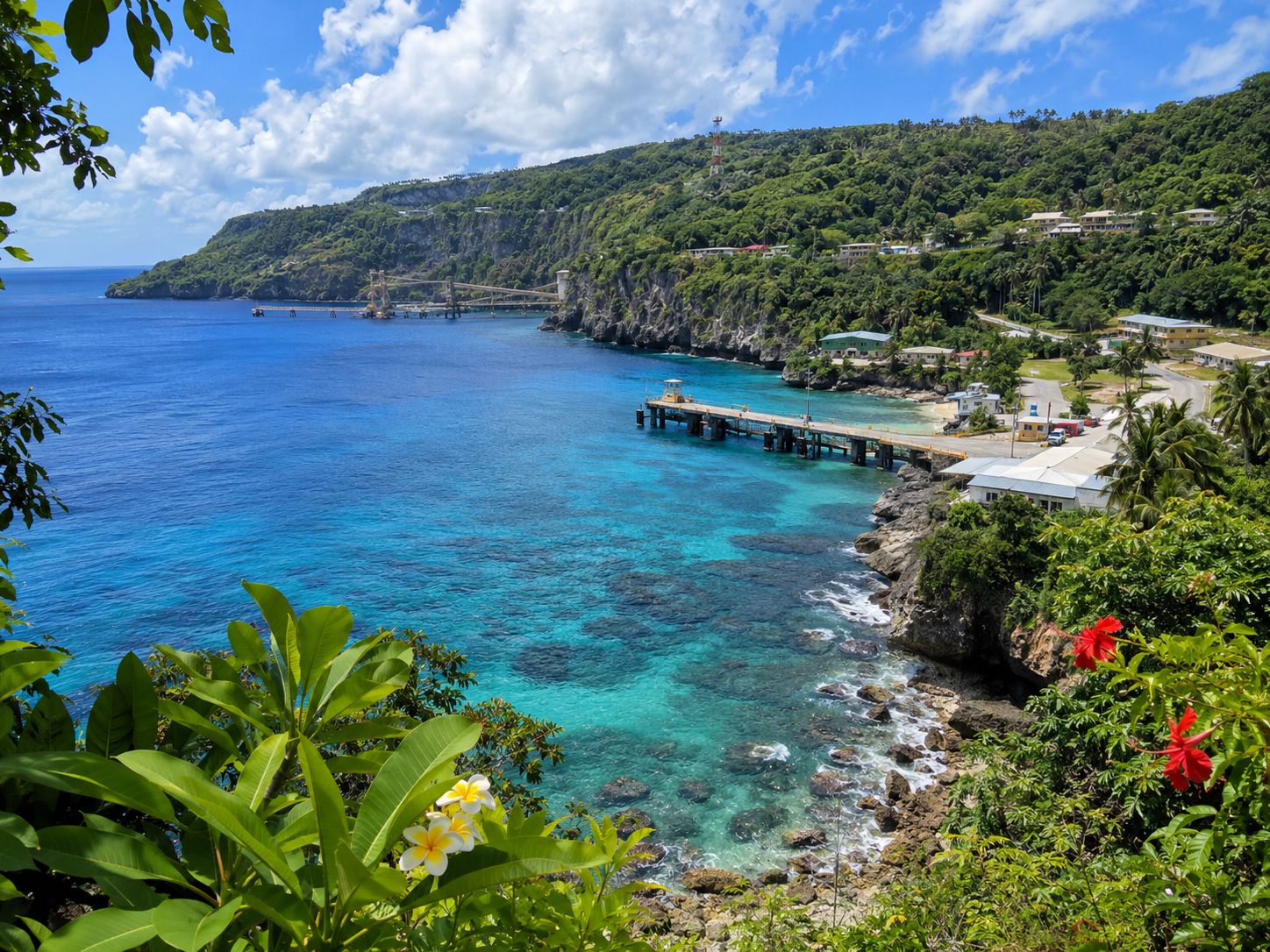
After landing, I collected my backpack and made my way toward Flying Fish Cove, the island's principal settlement.
Standing near the waterfront, I could hardly believe the color of the sea. The water changed from brilliant turquoise near the shore to a deep sapphire blue farther out.
I sat on a rock, breathing in the warm tropical air, and watched the gentle movement of the waves.
"This is going to be an interesting journey," I whispered to myself.
The Day the Forest Turned Red
The following morning, I set out to explore Christmas Island National Park.
I had arranged to travel with a local guide who understood the island's wildlife and knew which roads were accessible during the crab migration.
We had barely entered the rainforest when he suddenly slowed the vehicle.
"Daniel, look ahead."
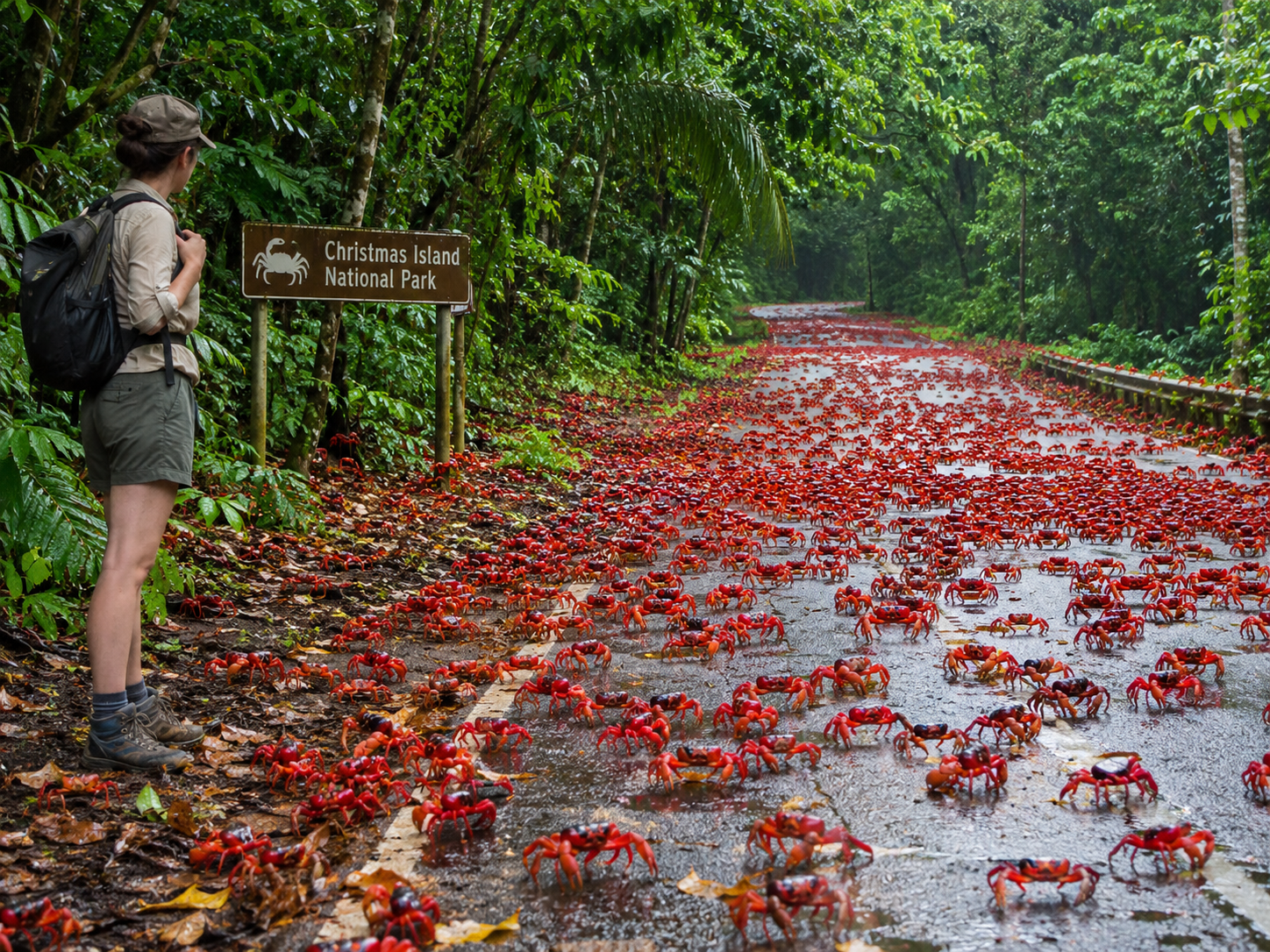
At first, I thought someone had scattered red leaves across the road. Then the entire road seemed to move.
Thousands upon thousands of bright red crabs were crawling across the asphalt, emerging from the forest on one side and disappearing into the vegetation on the other.
I stepped out carefully and stood beside the vehicle, completely amazed.
The crabs were on an extraordinary mission. Each year, when the rains arrive and conditions are right, millions of them leave their forest homes and make their way toward the ocean to reproduce.
Some climbed over fallen branches. Others moved around rocks. A few stopped briefly before continuing their remarkable journey.
I had watched documentaries about the red crab migration, but nothing prepared me for seeing it in person.
For nearly an hour, I simply watched.
It was one of those rare moments when I felt less like a tourist and more like a privileged guest in nature's world.
A Hidden Paradise Called Dolly Beach
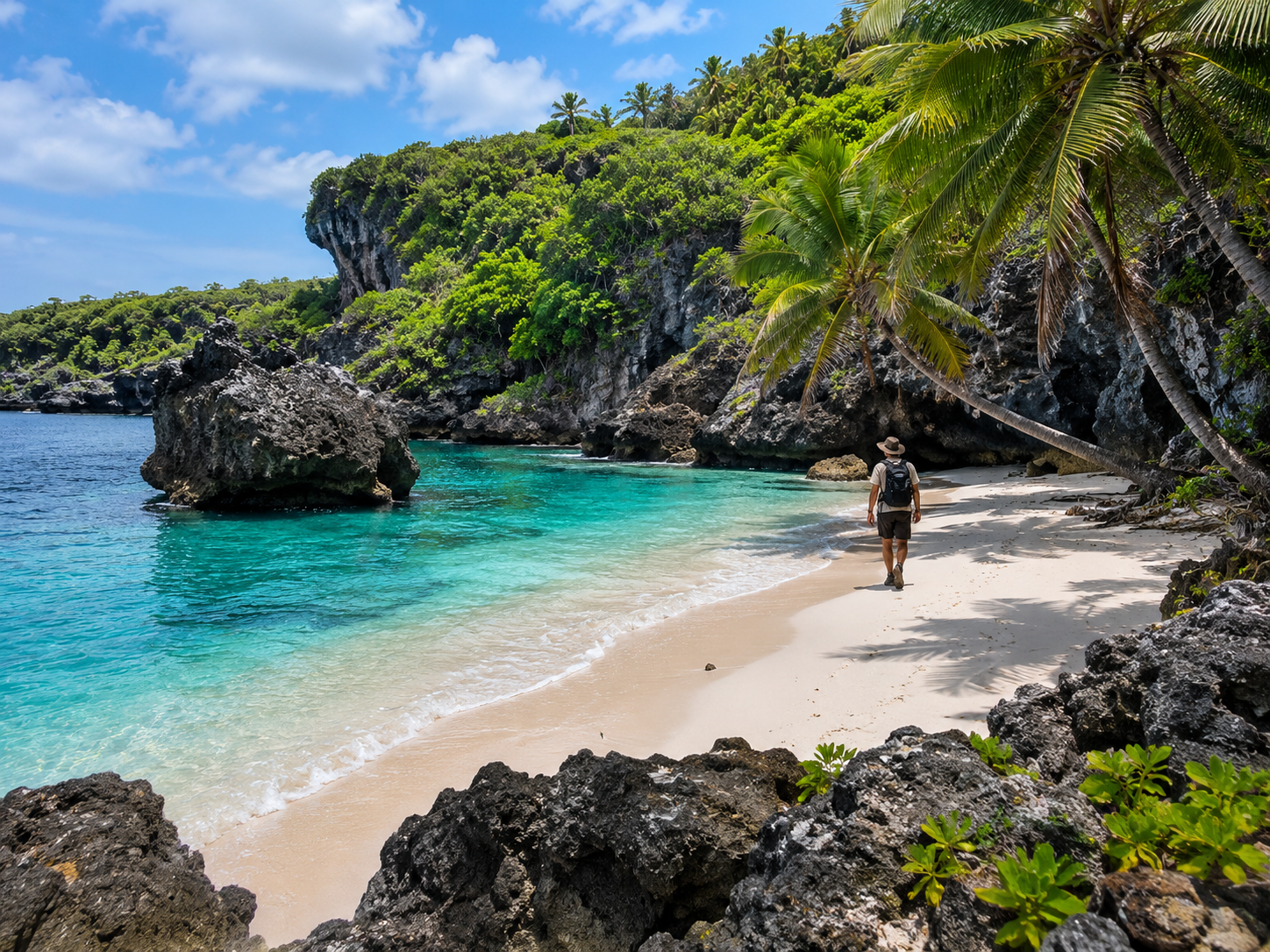
My next adventure took me to Dolly Beach, one of the island's most beautiful and secluded coastal locations.
Getting there involved a walk through tropical rainforest, where enormous trees formed a natural canopy above the trail.
I could hear birds calling from somewhere high in the branches, although I rarely managed to spot them. Occasionally, a crab would appear beside the path, reminding me to watch where I stepped.
Then, almost without warning, the forest opened.
Before me lay a magnificent stretch of pale sand, leaning coconut palms, and an endless blue ocean.
There were no beach clubs, souvenir stalls, or crowds of holidaymakers. Just the sound of waves washing ashore and the wind moving through palm leaves.
I removed my shoes and walked slowly along the sand.
I found a comfortable place beneath a palm tree and spent the afternoon enjoying the scenery.
It occurred to me that we often travel halfway around the world searching for something spectacular, only to discover that the greatest luxury is sometimes silence.
The People Who Make the Island Special
Red crabs and rediscovering the Chinese religions of Christmas Island - ABC Religion & Ethics
One of my favorite discoveries was the island's remarkable cultural diversity.
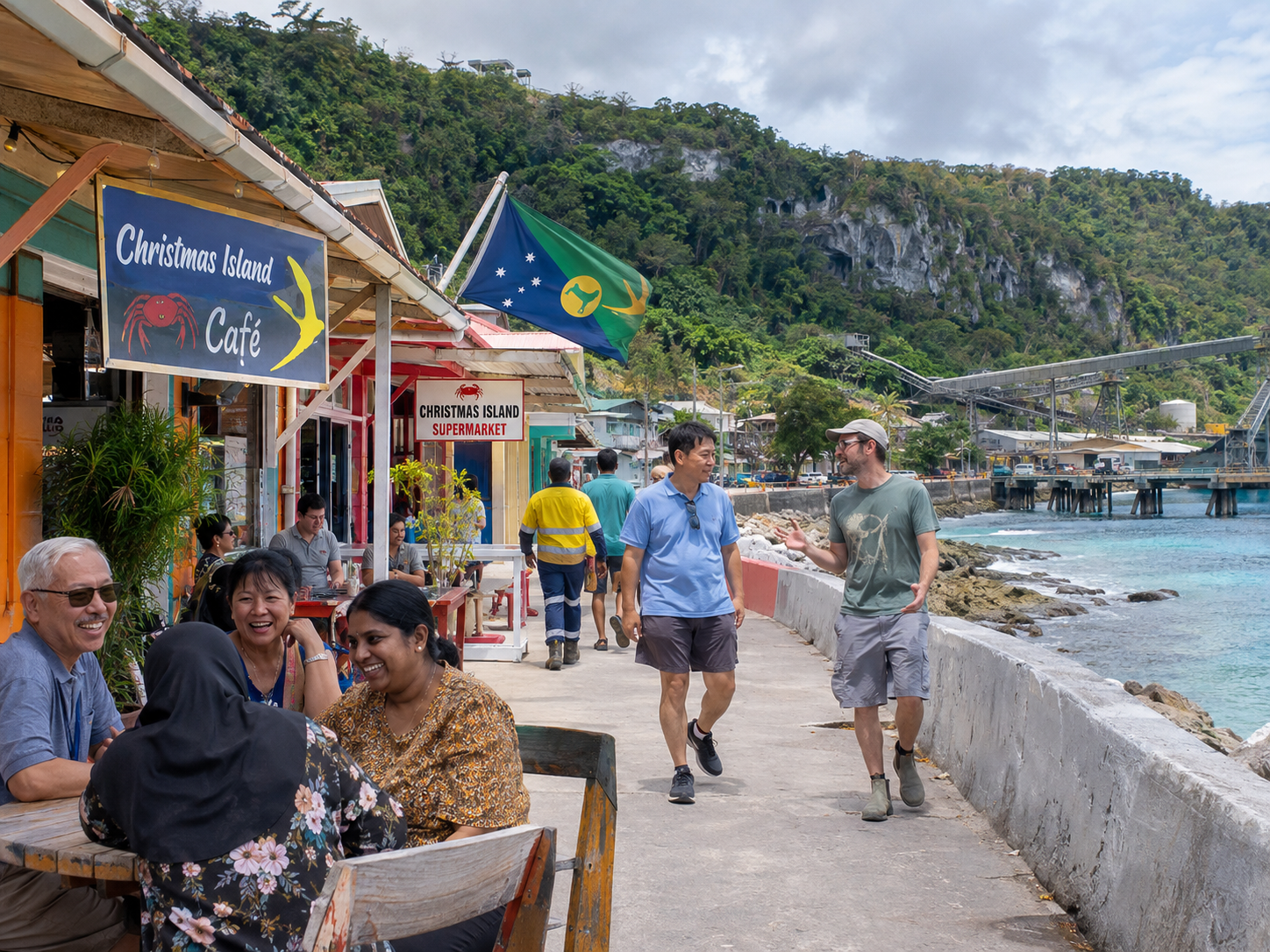
Christmas Island has a fascinating community made up of people with Chinese, Malay, and European heritage. Walking through its settlements, I noticed Chinese temples, mosques, and buildings reflecting different chapters of the island's history.
One afternoon, I stopped at a small local eatery for lunch.
I ordered a plate of noodles and a cold drink, then started talking with a man sitting nearby.
He had lived on the island for many years.
"Most visitors come for the crabs," he told me with a smile. "But some of them return because of the people."
We talked about island life, the changing seasons, and the close relationships that develop in a small community.
He explained that living on a remote island brought challenges. Supplies had to travel long distances, transport options were limited, and everyone depended on one another.
But there was also something special about knowing your neighbors.
As I continued exploring, I began to understand what he meant.
Christmas Island was not simply a beautiful destination. It was a living community with its own traditions, history, and identity.
Discovering the World Beneath the Waves
Scuba Diving — Christmas Island
On my fourth day, I joined a local snorkeling excursion.
Christmas Island is surrounded by remarkably deep ocean, and its underwater world has become famous among divers for its coral reefs, colorful fish, and spectacular marine environment.
As soon as I entered the water, I felt as though I had stepped into another world.
Schools of tropical fish moved around the reef. Sunlight filtered through the clear water, illuminating the coral formations below.
I floated quietly, watching the marine life move around me.
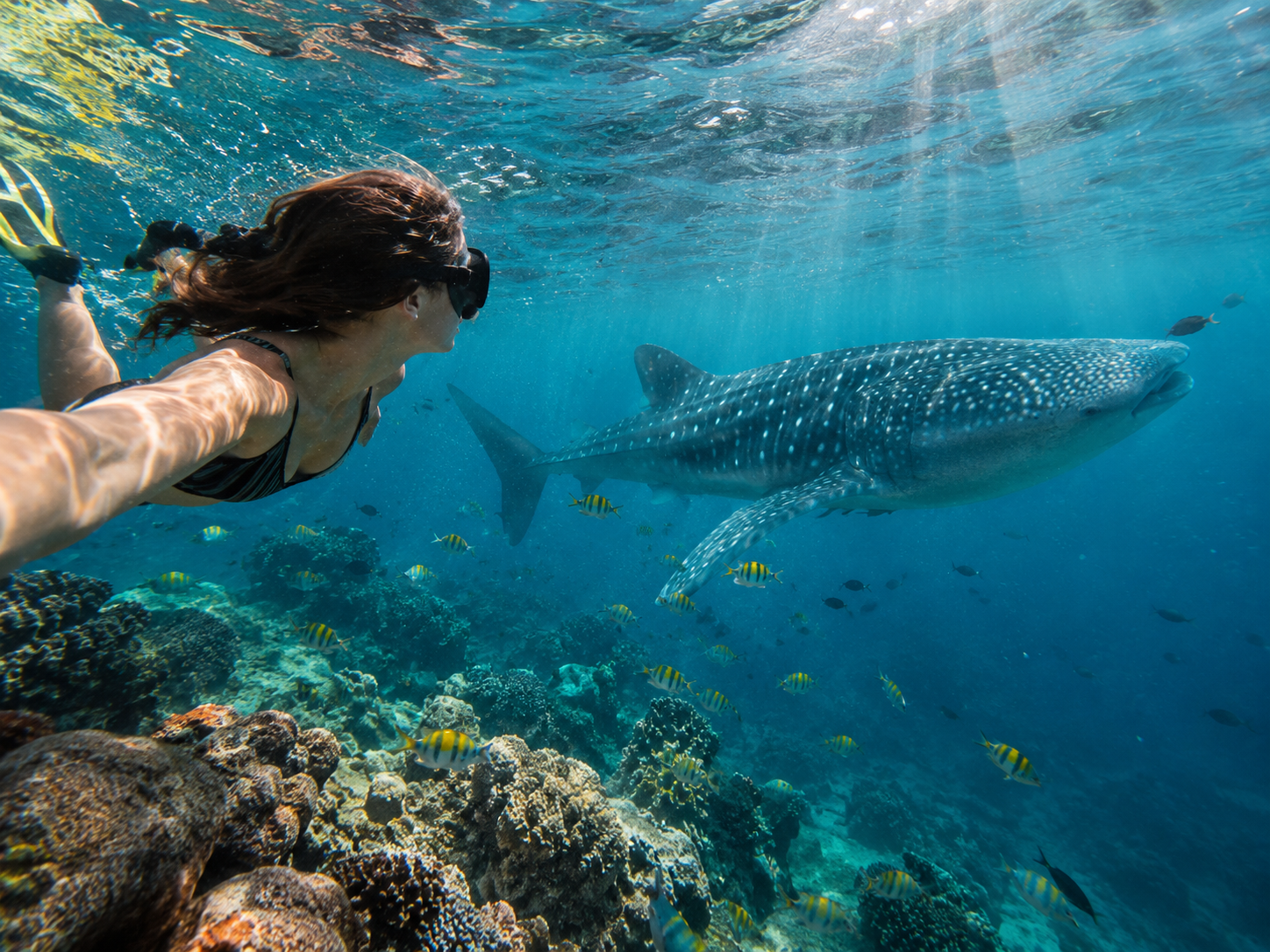
During certain seasons, whale sharks also visit the waters around Christmas Island. Unfortunately, I did not encounter one during my excursion, although the possibility alone made the adventure exciting.
What impressed me most was the feeling of being surrounded by nature.
There were moments when I forgot about the world above the surface.
No traffic, no telephones, no deadlines.
Just water, light, and life.
My Last Evening on Christmas Island
Category:Flying Fish Cove - Wikimedia Commons
On my final evening, I returned to Flying Fish Cove.
The afternoon sun was slowly descending toward the horizon, bathing the sea in shades of gold and orange.
I bought a drink and found a quiet spot overlooking the water.
As I watched the sunset, I thought about everything I had experienced during the past few days.
The extraordinary red crab migration. The peaceful rainforest. The beautiful coastline. The underwater world. And the kindness of people whose lives were so different from my own.
I had arrived expecting a tropical adventure.
Instead, I discovered something more meaningful.
Christmas Island reminded me that the world still contains places where nature is not simply a backdrop for tourism. It is part of everyday life, shaping how people live, travel, and understand their surroundings.
As darkness settled over the island, I made a promise to myself.
One day, I would return.
Perhaps during another crab migration. Perhaps simply to sit beside the ocean and listen to the waves.
Either way, Christmas Island had earned a permanent place in my travel memories.
And if anyone ever asked me why they should visit this remote island in the Indian Ocean, my answer would be simple:
"Go for the extraordinary nature, stay for the warmth of its people, and leave with a story you will remember for the rest of your life."
Daniel Morgan is a fictional New Zealand traveler created for this first-person travel story. The journey is an imaginative narrative based on Christmas Island's real geography, wildlife, and multicultural heritage.